
Wildlife Encounter — Edition 001
Jack (T137A) — When Power Meets Resilience — Field Story & Photography Technique
By Wildlife Photographer Lee Andelson
This Bigg’s killer whale encounter featuring Jack (T137A) was photographed in the Salish Sea while documenting real Bigg’s killer whale behavior in active coastal waters. In the Wild Encounter series, wildlife photographer Lee Andelson shares real field stories, camera techniques, and wildlife behavior insights from encounters in the wild.
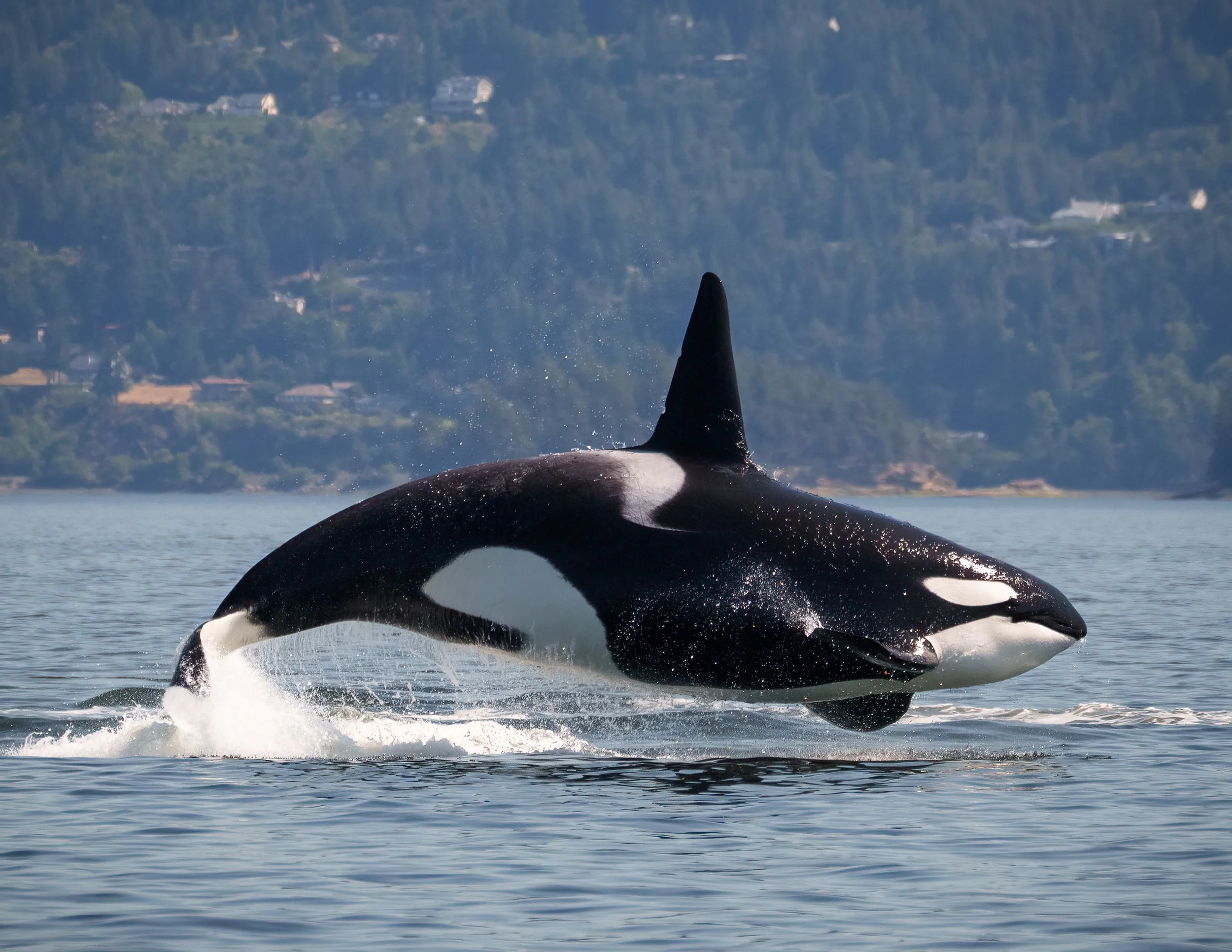
Encounter Field and Camera Data:
Location: Salish Sea, Pacific Northwest
Species: Bigg’s Killer Whale (Transient Orca) — Jack (T137A)
Behavior: Full Breach
Conditions: Coastal summer light, stable surface conditions
Camera Setup:
Camera Body: Sony A1
Lens: Telephoto wildlife lens (400–600mm range typical)
Shutter: ~1/3200 sec
Aperture: ~f/4.5
ISO: Auto (adjusted for available light)
Some Animals You Photograph. Some You Root For.
If you’ve spent time on the water in the Salish Sea, you know Jack.
He’s one of the most recognizable Bigg’s killer whales in the region. Massive. Broad-bodied. Unmistakable when he comes out of the water. When Jack breaches fully, it doesn’t feel like movement. It feels like controlled chaos.
Blink. React too late. Miss the frame. The moment is gone.
Photographing a whale like Jack has never been about luck. It’s anticipation. Fast shutter speeds. Locked-in autofocus. Staying calm when adrenaline spikes and everything in your brain is telling you to react instead of predict.
This is what Wake Up To Adventure is built on — learning how to read wildlife, building the skill to capture moments that happen in seconds, and being out there when an animal decides to show you something unforgettable.
The Story Most People Don’t Know
A few years ago, Jack went through something that could have changed everything for him.
In 2019, he appeared with a severe injury along his tail stock — the powerful section between dorsal fin and tail that drives every surge of speed in the water. No one knows exactly what caused it, but for a time, it slowed him down.
He was often seen trailing behind his family. When they moved, he struggled to keep pace. During hunts, he couldn’t fully participate. But what stood out wasn’t just his injury — it was his family. They stayed close. They helped keep him fed. They adjusted around him.
By the following year, Jack was back — strong, fast, and unmistakably himself.
Moments like this are reminders that even apex predators aren’t invincible. But resilience in the wild can be incredible to witness.
How This Image Was Captured — Field Technique
Capturing breaches from adult Bigg’s killer whales requires pattern recognition more than reaction speed.
The goal isn’t to chase breaches. It’s to read body tension, surface positioning, and directional travel. Subtle posture shifts, acceleration near the surface, and breath interval patterns often signal energy building before a breach event.
Boat positioning matters. Stable orientation relative to swell direction and sun angle creates the shooting platform needed when the moment happens.
Camera Approach for Breaching Killer Whales
Breaching events demand speed and commitment to settings.
Shutter speed is priority — typically between 1/2500 and 1/4000 second to freeze spray and body motion. Aperture often sits between f/4 and f/5.6 to maintain subject isolation while allowing slight forgiveness for distance shifts during the breach. ISO is allowed to float because motion blur cannot be corrected later.
Autofocus tracking must be trusted. Once locked, you track through spray and impact rather than trying to reacquire focus mid-event.
Reading Behavior Before the Breach
Breaching often follows energy build cycles. Tracking surfacing rhythm, swim direction changes, and acceleration patterns helps build a predictive understanding of when explosive behavior may occur.
This is less about reacting and more about understanding how environment, movement, and behavior align.
Why Encounters Like This Matter
There are moments where you stop thinking like a photographer and just feel small — not in a negative way, but in a grounding, honest way. Standing next to an animal like Jack reminds you that power in the wild isn’t just strength. It’s survival. Adaptation. Resilience.
Some encounters stay with you forever.
Jack is one of those.
Share Your Wild Encounter
If you’ve ever had a wildlife moment that stayed with you — not impressed you, but changed you — I want to hear it. Because these stories build connection. And connection is what ultimately protects the wild.